The Era of Search Is Over — Welcome to the Age of AI Answers
AI now selects a single authoritative answer to every query — bypassing search results entirely. Marketing's target has shifted from consumer awareness to AI knowledge architecture. Marketing Pivot and Project AEGIS translate this shift into an executable system.
Dohak Kim
Marketing Architect · Ph.D. in International Marketing (UIBE)
Published
2026-05-03
Updated 2026-06-05
Summary
The SEO-driven search era is ending. AI answer engines now deliver one response per query, and brands not included in that response effectively cease to exist. Marketing Pivot redefines marketing as AI-first architecture — integrating search intent, decision flow, and content structure into one system.
A Fundamental Break: We Are Playing a Different Game
For decades, marketing operated on a clear premise: consumers search, we appear, clicks drive conversions. SEO, performance marketing, and content strategy were all built on this architecture.
That premise is breaking down.
Consumers no longer browse search results. They ask AI a question and consume a single answer. This is not a channel shift — it is a structural discontinuity in how marketing works.
From Search to Answer: The Rules Have Changed
In the old model, appearing on page one of Google was enough to give your brand a chance. In the new model, if you are not in the AI's single generated response, your brand does not exist for that query.
This is not about traffic declining. A brand not remembered by AI is a brand that does not exist in the market.
Zero-click is not a trend — it is the new default. As of 2025, over 60% of Google searches end without a click. For AI-native platforms like ChatGPT and Perplexity, that figure approaches 90%.
Why Traditional Marketing Is Failing
Most organizations are still running on the old model:
- Keyword-centric SEO targeting rank positions
- Funnel-based conversion design
- Content volume strategies
These approaches fail not because of poor execution, but because the underlying model is wrong. They were designed for search→click. The new infrastructure is intent→AI answer→brand citation.
The Marketing Pivot: Redefining the Operating Model
Marketing Pivot does not improve the old model. It replaces it. Three core shifts:
- Keywords → Intent: Not what terms rank, but what questions get asked and which brands get cited in answers.
- Funnel → Decision Flow: Not a linear purchase funnel, but a CDJ (Customer Decision Journey) that AI traverses when composing answers.
- Content Volume → Citation Architecture: Not more content, but structured content that AI systems can reliably extract and cite.
Project AEGIS: The Executable System
The Marketing Pivot is a framework. Project AEGIS is how you execute it. The platform integrates:
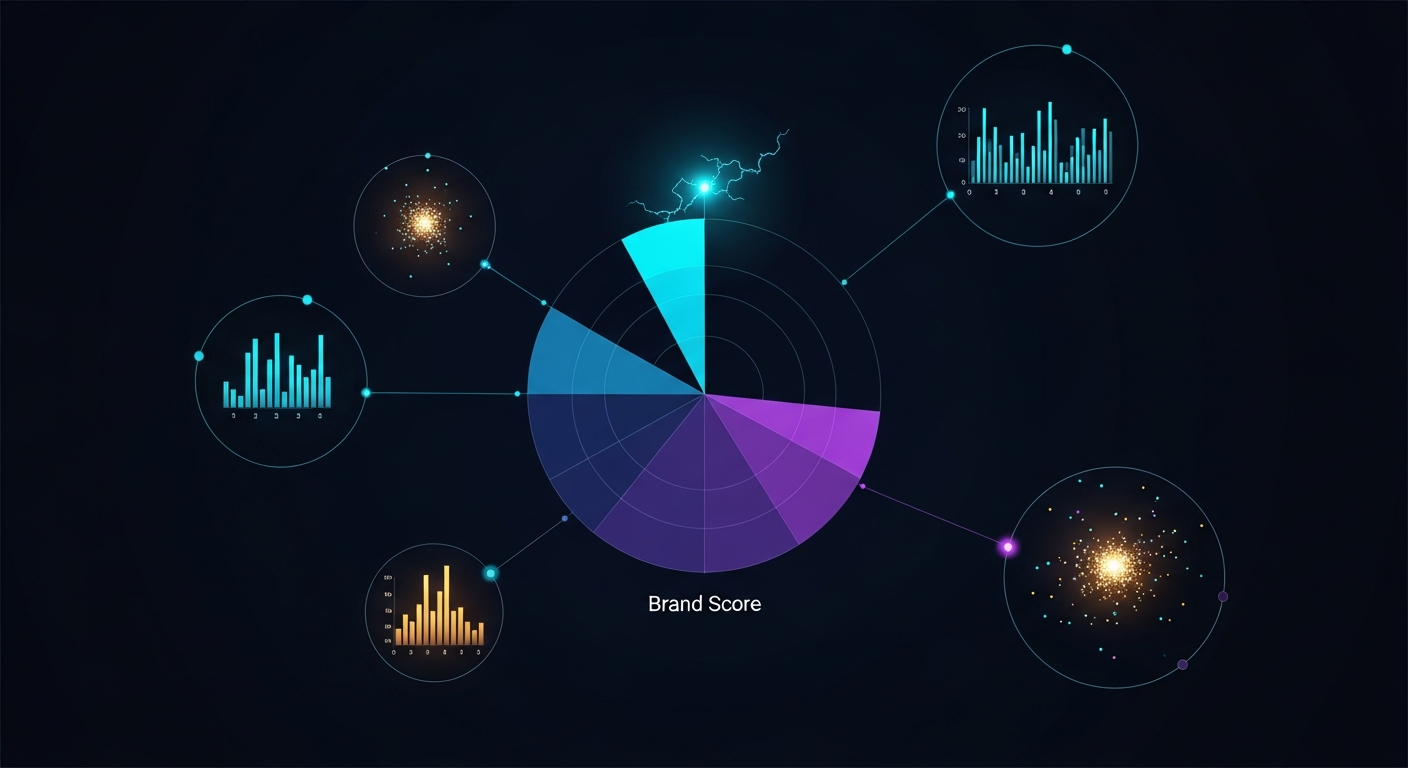
- AEGIS Insight: 38-metric diagnosis of your brand's AI search visibility (SEO + AEO + GEO), powered by Gemini 2.5 Flash + real-time Google Search Grounding.
- C³ Cube Strategy: CEP clustering, Hub & Spoke media architecture, and three-layer content strategy (SEO + AEO + GEO).
- FORGE: AI content studio that generates AEO-optimized blog drafts, LinkedIn posts, and press releases with FAQPage/HowTo schema pre-built.
The goal is not to rank — it is to be cited. A brand that AI cites is a brand that markets without paying for every impression.
What This Means for Your Brand Right Now
The brands that will dominate the AI search era are building their Entity now — accumulating the signals (original data, media mentions, structured definitions, expert authority) that LLMs rely on when composing answers.
The ones that wait are trading market share for familiarity with the old model.
Marketing is now the practice of designing AI's memory. Project AEGIS automates that design.
Frequently Asked Questions
Q.What is AEO (Answer Engine Optimization)?
A.AEO is the practice of optimizing content so that AI answer engines — ChatGPT, Perplexity, Google AI Overview — select your brand as the cited source when generating responses. FAQPage/HowTo JSON-LD schema, E-E-A-T signals, and direct-answer paragraph structure are the core levers.
Q.How is GEO different from SEO?
A.SEO optimizes for rank positions in Google search results. GEO (Generative Engine Optimization) optimizes for AI citation — getting LLMs to include your brand in generated answers. SEO drives click traffic; GEO drives brand authority in zero-click AI responses.
Q.Why is traditional SEO no longer sufficient?
A.Traditional SEO was designed for a search-click model: rank → click → convert. AI answer engines break this model by delivering a single answer without requiring a click. Brands not cited in that answer are invisible to an entire channel of buyer intent.
Q.What does Marketing Pivot offer that traditional marketing does not?
A.Marketing Pivot does not improve existing strategies — it redesigns the operating model. The shift is from keywords to intent, from funnels to decision flows, and from content volume to citation architecture. Project AEGIS automates this entire pipeline.
How to Apply This — Step by Step
- 1
Analyze Search Intent
Identify what questions consumers ask AI, not just what keywords they type. Extract Category Entry Points (CEPs) — the specific mental triggers that cause someone to think about your product category.
- 2
Map the Decision Flow
Model the Customer Decision Journey (CDJ) in 4 stages (Awareness → Consideration → Decision → Loyalty) and design what AI should say at each stage to include your brand.
- 3
Structure Content for Citation
Apply Hub & Spoke architecture: a comprehensive Hub page covering the main topic, with Spoke pages drilling into subtopics. Add FAQPage and HowTo JSON-LD schema to every page.
- 4
Build Brand Entity
Accumulate E-E-A-T signals: original research, media mentions, expert author credentials, co-occurrence with category keywords. These are the signals LLMs rely on when choosing citation sources.
More in Marketing Insights