CEP × CDJ: The Framework for AI-Era AEO/GEO Strategy
The era of demographic targeting is over. Context ownership is the new competitive advantage. This post explains how to combine Category Entry Points (CEP), Customer Decision Journey (CDJ), and the C³ Cube model to build a brand that AI search engines cite across every relevant context.
Dohak Kim
Marketing Architect · Ph.D. in International Marketing (UIBE)
Published
2026-06-01
Updated 2026-06-05
Summary
Cookies are gone. ROAS is falling. AI search has reorganized buyer intent. CEP (Category Entry Point) and CDJ (Customer Decision Journey) are the conceptual anchors of a new marketing architecture — one where you don't target audiences but own contexts, and where brand visibility is measured at the AI answer layer.
Why Demographic Targeting Is Over
For most of marketing history, the core question was "who is my customer?" Demographic profiles, psychographic segments, audience cohorts — all designed to identify the right person.
In the AI search era, the right question is different: "What situations trigger my category, and does AI cite my brand in those contexts?"
Cookies are increasingly restricted. Third-party audiences are degrading. But more fundamentally, the buyer journey itself has changed. Consumers don't follow the funnel your analytics software models — they ask AI at arbitrary points, get a synthesized answer, and often make decisions before touching your owned properties.
Category Entry Points: The Unit of Context Ownership
Byron Sharp's Ehrenberg-Bass Institute introduced the Category Entry Point concept: every product category has a set of mental triggers that activate buyer consideration. The more CEPs a brand "owns" — i.e., the more buyers think of your brand when the trigger fires — the larger the market share.
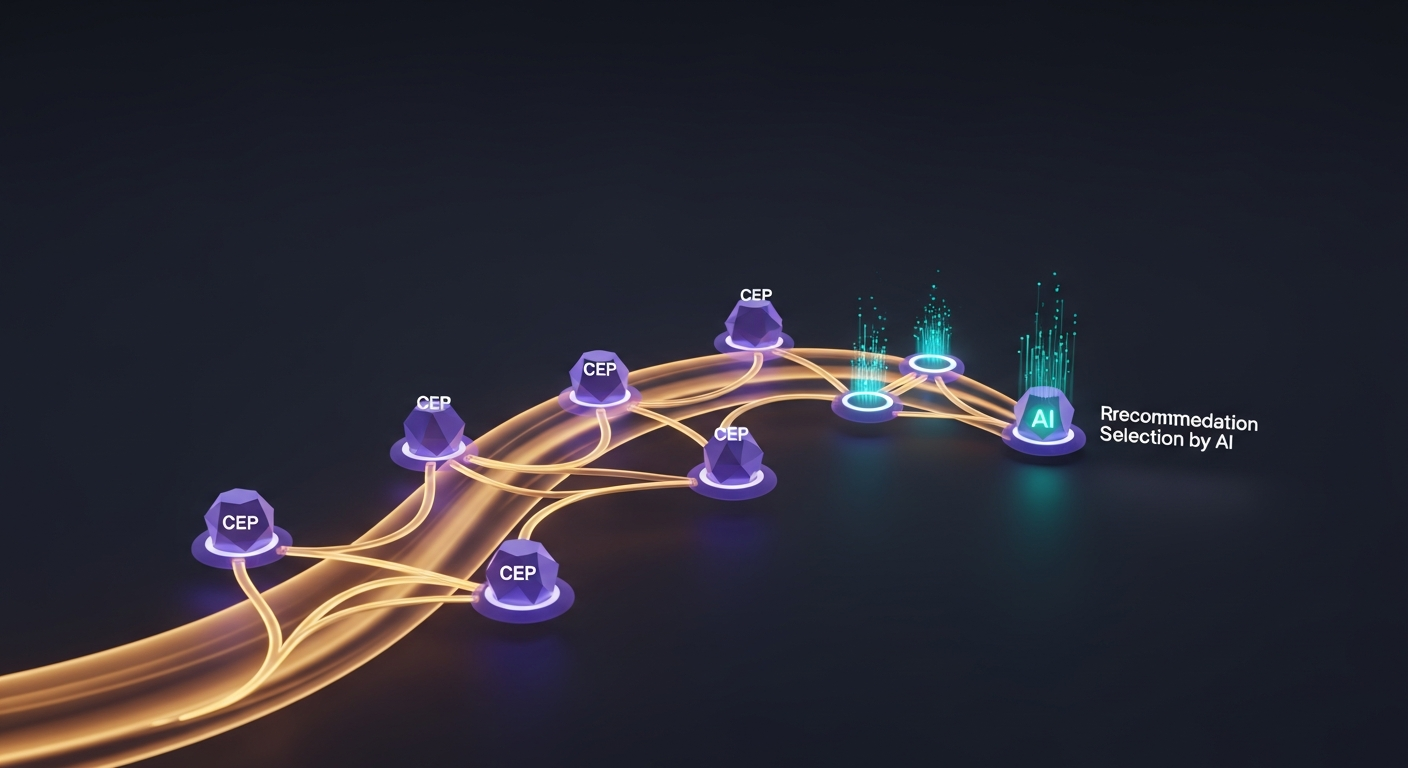
In the AI search era, owning a CEP means being the brand AI cites when a buyer describes that trigger context. If "I need to quickly create a professional report for tomorrow's meeting" is a CEP for your BI tool, and ChatGPT's answer to that prompt includes your brand as the top recommendation, you own that CEP.
This is fundamentally different from owning a keyword. CEP ownership is about context ubiquity — being present across every situation where your category is relevant, as cited by AI.
CDJ: The Non-Linear Journey AI Navigates
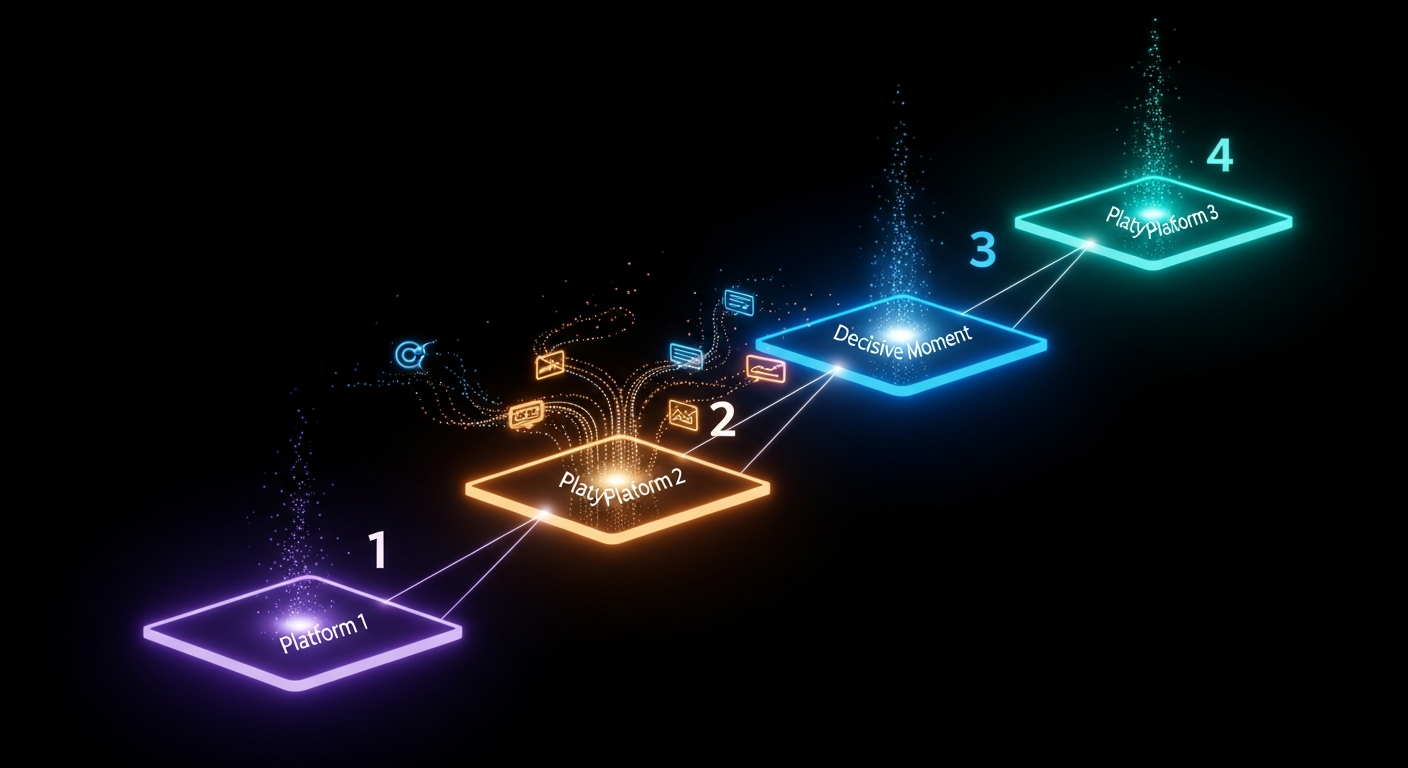
McKinsey's Customer Decision Journey (CDJ) remains the best model of modern purchase behavior precisely because it captures non-linearity. Consumers don't move Awareness → Consideration → Decision in sequence. They loop, skip, reverse, and re-enter — particularly when AI provides a synthesized answer that compresses multiple CDJ stages into a single response.
When AI answers "best BI tools for startups," it may simultaneously address Awareness (what BI is), Consideration (which tools exist), and Decision (which is best for your situation). A brand with AEO-optimized content at all three stages is cited across the entire compressed journey. A brand with content only at the Consideration stage is cited in roughly one-third of relevant responses.
The C³ Cube: Context × Conversion × Cognition
Project AEGIS extends CEP and CDJ with a third dimension: Cognition — the specific search intent type (informational, navigational, commercial, transactional).
The C³ Cube maps:
- Context (C¹): Which CEP is being triggered?
- Conversion (C²): Which CDJ stage is active?
- Cognition (C³): What intent type is driving the query?
Each cell of the cube defines a specific content requirement. "Energy management for remote workers" (CEP) × "Consideration stage" × "Commercial intent" = a comparison article with pricing context, testimonials, and FAQPage schema. This precision eliminates the guesswork from content planning.
Executing the Strategy with Project AEGIS
The C³ Cube is not a whiteboard exercise — it is directly executable within Project AEGIS:
- Run Signal to auto-cluster your category's CEPs from live SERP data
- Run C³ Cube Strategy to generate the full Hub & Spoke media plan with content assignments per cube cell
- Run Pathfinder to validate CDJ distribution across your seed keywords
- Run FORGE to generate AEO content for each Hub and Spoke, with FAQPage + HowTo schema pre-built
The brands that systematically map and own CEPs across the CDJ in AI search will define the category in the AI-answer era — just as the brands that owned keywords defined it in the SEO era.
Frequently Asked Questions
Q.What is a Category Entry Point (CEP) and why does it matter for AI search?
A.A CEP is a specific situation or mental trigger that activates consumer need for a product category — e.g., "exhausted after a long day" triggers energy drinks. In AI search, CEPs represent the contexts where buyers ask AI for recommendations. Owning CEPs means your brand is the AI's default citation for those trigger situations. Project AEGIS's Signal tool auto-clusters CEPs from live SERP data.
Q.What is the Customer Decision Journey (CDJ) and how does it differ from the traditional funnel?
A.The CDJ (McKinsey) models modern purchase behavior as: Awareness → Consideration → Decision → Loyalty. Unlike the linear funnel, the CDJ is non-linear — consumers loop back, skip stages, and are heavily influenced by AI-generated recommendations at multiple touchpoints. AEO/GEO strategy maps content to each CDJ stage to ensure brand presence throughout the journey.
Q.What is the C³ Cube and how does it extend CEP and CDJ?
A.C³ Cube is Project AEGIS's strategic model: Context (CEP) × Conversion (CDJ) × Cognition (Search Intent). Context maps entry triggers, Conversion maps journey stages, and Cognition maps the specific intent type (informational, navigational, commercial, transactional). The intersection of all three defines the precise content type needed to be cited by AI for any given buyer situation.
Q.How does Hub & Spoke content architecture support CEP and CDJ coverage?
A.A Hub page covers a broad CEP context comprehensively (e.g., "energy management for remote workers"). Spoke pages drill into specific CDJ stages within that context (e.g., "best caffeine alternatives for afternoon slump — Consideration stage"). This architecture concentrates topical authority on the Hub while providing detailed answers for each stage, maximizing both SEO rank and AI citation probability.
How to Apply This — Step by Step
- 1
Identify Your Top 10 CEPs
Use Signal to run live SERP analysis on your category. Cluster the emerging triggers: what specific situations and needs drive consumers to search for your category? Rank by search volume and AI citation frequency.
- 2
Map Each CEP Across the CDJ
For each CEP, define what content is needed at each CDJ stage: Awareness (what is this?), Consideration (which option?), Decision (why this brand?), Loyalty (how to get more value?). This becomes your content roadmap.
- 3
Apply the C³ Cube in AEGIS
Run C³ Cube Strategy with your category and top CEPs. The tool auto-clusters up to 15 CEPs from live SERP data and generates a Hub & Spoke media plan with SEO + AEO + GEO content layers assigned to each cell.
- 4
Generate AEO Content via FORGE
Connect C³ output to FORGE. Generate AEO blog drafts for Hub pages (with FAQPage + HowTo schema) and social content for each Spoke. The schema signals to AI systems that your content is structured for citation at that specific CEP × CDJ intersection.
More in CDJ Strategy