What Is a CEP? — The Complete Guide to Context Entry Points in AI Marketing
A CEP (Context Entry Point) is the specific situation or mental trigger that causes a consumer to recognize a need and turn to AI or search. This guide covers the definition, difference from keywords, how AEGIS Signal auto-extracts CEPs from live SERP data, and how to turn them into AEO content.
Dohak Kim
Marketing Architect · Ph.D. in International Marketing (UIBE)
Published
2026-06-04

Summary
A CEP (Context Entry Point) is the specific situation that causes a consumer to turn to AI or search for solutions. Keywords capture "what was typed." CEPs capture "why, in what context, with what intent." In the AI search era, brands that own CEPs get cited; brands that only own keywords get skipped.
What Is a CEP? — The 30-Second Definition
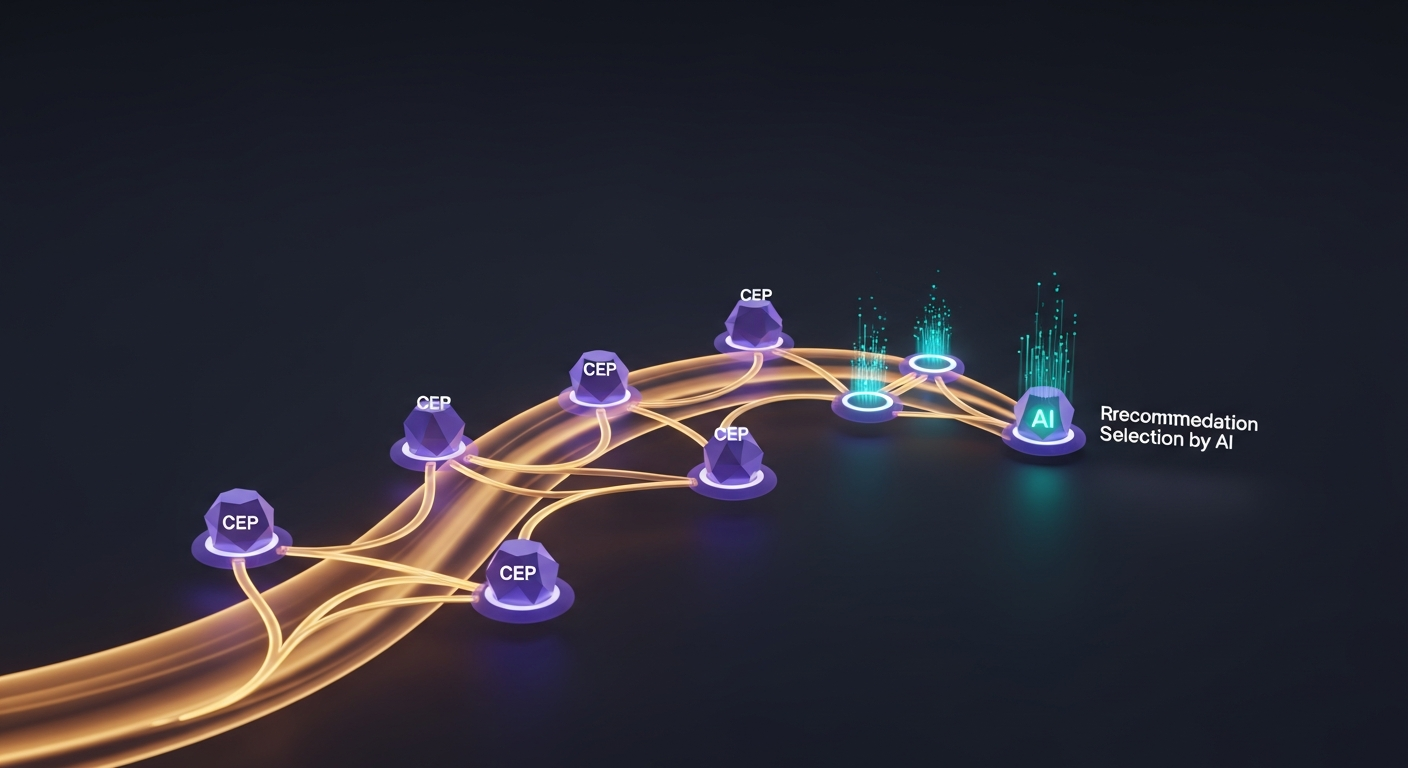
A CEP (Context Entry Point) is the specific situation or mental trigger that causes a consumer to recognize a need and turn to AI or search engines for solutions. It captures not just what someone typed — but why, in what situation, with what underlying intent they searched.
The concept originates from the Ehrenberg-Bass Institute's Category Entry Points — the mental cues that activate category consideration. In Project AEGIS's C³ Cube framework, this is extended to Context Entry Points: capturing the intersection of Situation (Context) × Purchase Journey Stage (Conversion) × Cognitive Intent (Cognition).
Why CEPs Are Central to AI Search Strategy
Traditional SEO operated on a simple equation: keyword = search intent. AI search engines break this equation.
When a user asks ChatGPT "recommend a laptop," AI doesn't just process the keyword "laptop" — it analyzes conversational context. If the prior message was "I'm starting a new job next week," AI recommends a high-performance work machine. If it was "buying a gift for my daughter starting college," AI recommends a student-focused budget option.
This is the CEP principle. AI search understands context — and cites brands associated with that context. To be the AI's cited source for a specific CEP, your brand must define and own that CEP before a competitor does.
CEPs vs Keywords — The Fundamental Difference
Even within the same category, different CEPs require completely different marketing strategies.
Example: Marketing intelligence platform category
- Keyword: "marketing automation tool" (one keyword)
- CEP 1: "Early-stage startup marketer building strategy without data" → low-cost, immediate-value tools
- CEP 2: "B2B sales team trying to improve AI search visibility" → AEO/GEO-specialized strategy tools
- CEP 3: "Marketing agency needing to automate client reports" → report generation and PDF export capability
Three CEPs, same category — but three completely different positioning, content, and messaging requirements. A single keyword strategy cannot own all three CEPs simultaneously.
CEPs in the C³ Cube Framework
Project AEGIS's C³ Cube Strategy defines CEPs across three intersecting axes:
- C¹ Context: The situation, environment, and moment where the CEP is triggered
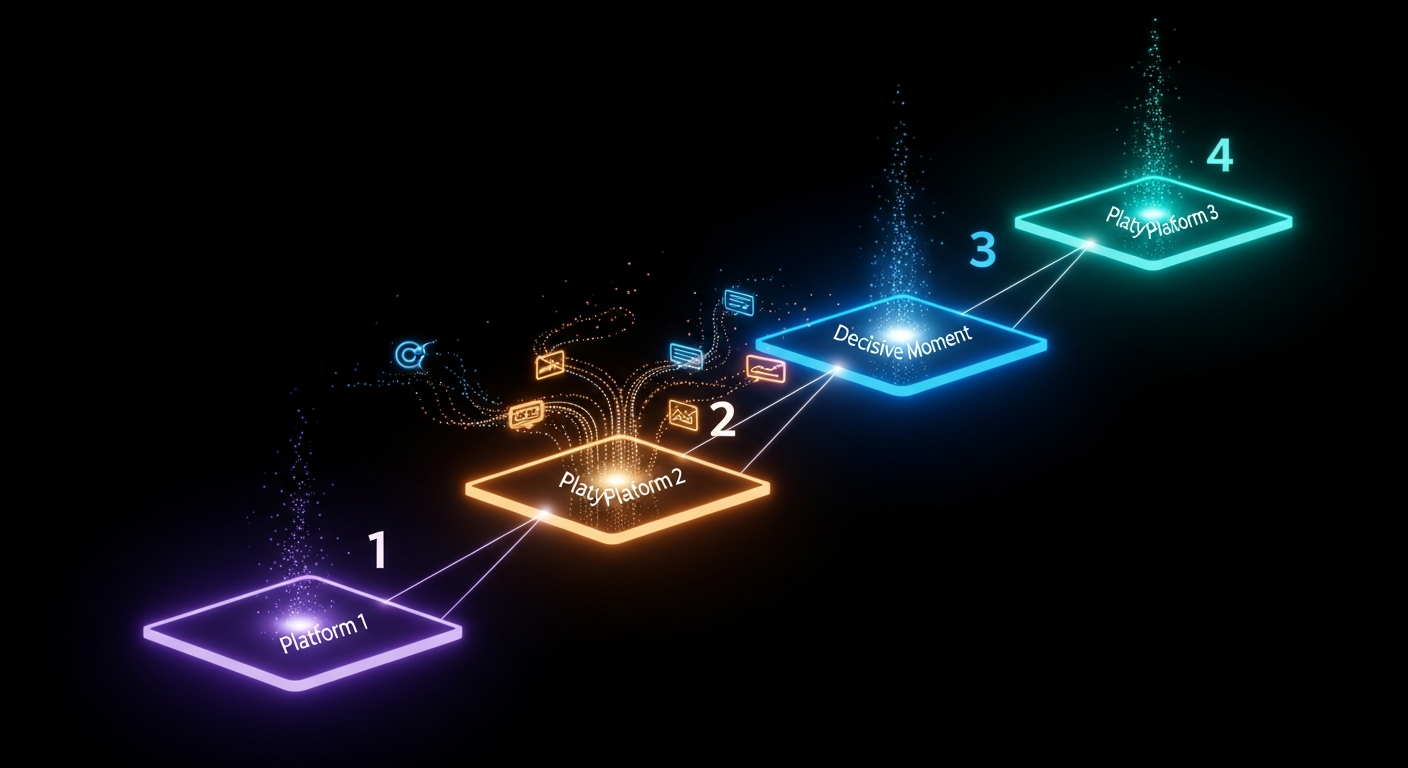
- C² Conversion: The CDJ stage this CEP maps to (Awareness / Consideration / Decision / Loyalty)
- C³ Cognition: The consumer's search intent type (informational, navigational, commercial, transactional)
The intersection of these three axes determines "what content, on which channel, with what message." AEGIS Signal auto-clusters up to 15 CEPs from live SERP data, and C³ Cube auto-generates the Hub & Spoke triple-media strategy for each.
How to Discover CEPs: Three Methods
CEP discovery must be grounded in observed data — real consumer search patterns, not marketer assumptions.
Method 1: AEGIS Signal Auto-Extraction
Enter core keywords and Signal analyzes live Google and Naver SERP data to automatically extract and cluster category CEPs. Each CEP receives Priority Score (importance), Brand SOV (current ownership percentage), and CDJ stage classification.
Method 2: Search Autocomplete Analysis
Type your core category keywords into Google Search and observe autocomplete results. Completions containing "when," "for," "before," "if I need to" — phrases embedding a situational context — are real CEPs emerging from actual query patterns.
Method 3: AI Query Pattern Analysis
Ask ChatGPT, Perplexity, or Claude directly: "In what specific situations do people typically search for [your category]?" The situations AI enumerates are high-probability CEP candidates. Cross-reference with SERP data to validate priority.
Turning CEPs into AEO Content
Once CEPs are identified, each requires content designed to be the AI's answer source in that specific context.
CEP → AEO Content Formula:
- Convert the CEP into a question format: "Need a laptop before starting a new job" → "What should I look for in a work laptop before starting a new job?"
- Place a direct answer in the first paragraph (inverted pyramid structure)
- Apply FAQPage + HowTo schema so AI can easily cite the structured content
- Connect CEP content via C³ Cube Hub & Spoke internal linking
AEGIS FORGE accepts CEP insights and automates this process. The Signal → C³ → FORGE pipeline handles CEP discovery through AEO content production in one connected workflow.
Why CEP Ownership Is a Long-Term Brand Asset
In the AI search era, brands that systematically own CEPs gain structural competitive advantages. AI answer engines tend to cite brands they have repeatedly encountered in the context of a specific CEP — which means early ownership compounds over time.
CEP ownership is equivalent to pre-booking positions in AI's associative memory. When a consumer describes a specific situation to AI, the brand associated with that situation context gets cited naturally. This is long-term brand architecture, not short-term tactical optimization.
Frequently Asked Questions
Q.What is a CEP (Context Entry Point)?
A.A CEP is the specific situation or mental trigger that causes a consumer to recognize a need and turn to AI or search engines for solutions. The concept originates from the Ehrenberg-Bass Institute's Category Entry Points. In Project AEGIS's C³ Cube, it is extended to Context Entry Points — capturing the intersection of Situation (Context) × Purchase Stage (Conversion) × Intent Type (Cognition).
Q.How are CEPs different from keywords?
A.Keywords capture "what was typed" (the What). CEPs capture "why, in what situation, with what intent" (the Why and Context). "Laptop recommendation" is one keyword — but CEPs include "onboarding for a new job and need a work laptop," "college student needing a graphics workstation," and "remote work setup for dual-monitor connection" — each requiring completely different positioning and content.
Q.What are the marketing advantages of a CEP-based strategy?
A.CEP-based strategy positions the same product or service differently across multiple contexts, each mapped to a specific consumer entry point. AI search engines are evolving toward context-aware responses — brands that have pre-built content for specific CEPs are disproportionately likely to be cited as the answer source in those contexts.
Q.How do I discover CEPs for my brand?
A.AEGIS Signal analyzes live Google and Naver SERP data to auto-extract and cluster up to 15 CEPs for any keyword category. It returns Priority Score, Brand SOV (share of voice), and CDJ stage classification for each CEP.
Q.What is the relationship between CEPs and CDJ?
A.A CEP is the contextual moment when a customer first accesses search or AI at a given CDJ stage. In C³ Cube, CEP maps to the Context (C¹) axis, CDJ maps to the Conversion (C²) axis. Strategy is built at the intersection of the two.
Q.How do I create content for a specific CEP?
A.For each CEP, write content that connects "context + intent + brand solution." AEGIS FORGE accepts CEP insights from Signal and auto-generates AEO/GEO-optimized content per CEP. The full pipeline — Signal → C³ → FORGE — handles CEP discovery through content production in one connected workflow.
How to Apply This — Step by Step
- 1
Discover CEPs
Run AEGIS Signal with core category keywords. It analyzes live Google and Naver SERP data to automatically extract and cluster up to 15 CEPs with Priority Score and Brand SOV for each.
- 2
Map CEPs to CDJ Stages
Classify each CEP by which Customer Decision Journey stage it belongs to (Awareness, Consideration, Decision, Loyalty). AEGIS Pathfinder visualizes CDJ stage distribution and content gaps for your keyword set.
- 3
Design CEP-Specific Content
Use C³ Cube to auto-generate Hub & Spoke content strategy, Context definitions, and Cognition type (informational/navigational/commercial/transactional) for each CEP. Design content that directly answers the question a consumer would ask AI in that specific context.
- 4
Produce AEO-Optimized Content
Send CEP insights to AEGIS FORGE to automatically generate FAQ + HowTo structured content per CEP. Lead every piece with a direct answer matching the CEP context for Featured Snippet targeting.
- 5
Measure CEP Ownership
Run AEGIS Insight to track AEO and GEO score changes for CEP-related keywords. Monitor scenario and AEGIS Index movement to measure CEP ownership progress over time.
More in CDJ Strategy