When Competitors Get Cited by AI and You Don’t — A Framework for AEO Competitive Gap Analysis
If you have more content than your competitor but AI answer engines keep citing them instead, the problem is not volume -- it is structure. A framework for finding the real gap across three separate axes: entity recognition, structured data, and citation context.
Dohak Kim
Marketing Architect · Ph.D. in International Marketing (UIBE)
Published
2026-09-03

Summary
"We’ve written way more content, so why does ChatGPT only mention our competitor?" Answering that question means pulling the gap apart across three separate axes, not just writing more.
We Have More Content -- So Why Does AI Only Cite the Competitor?
This is a common complaint in the field -- "we’ve written way more content, but ask ChatGPT and only the competitor’s name comes up." Treating this as a volume problem leads to the wrong prescription (write even more). In reality, it is a gap that shows up across three separate axes, and unless you figure out which axis is the real cause, you end up pouring resources into the wrong place.
The 3 Axes of Gap Analysis
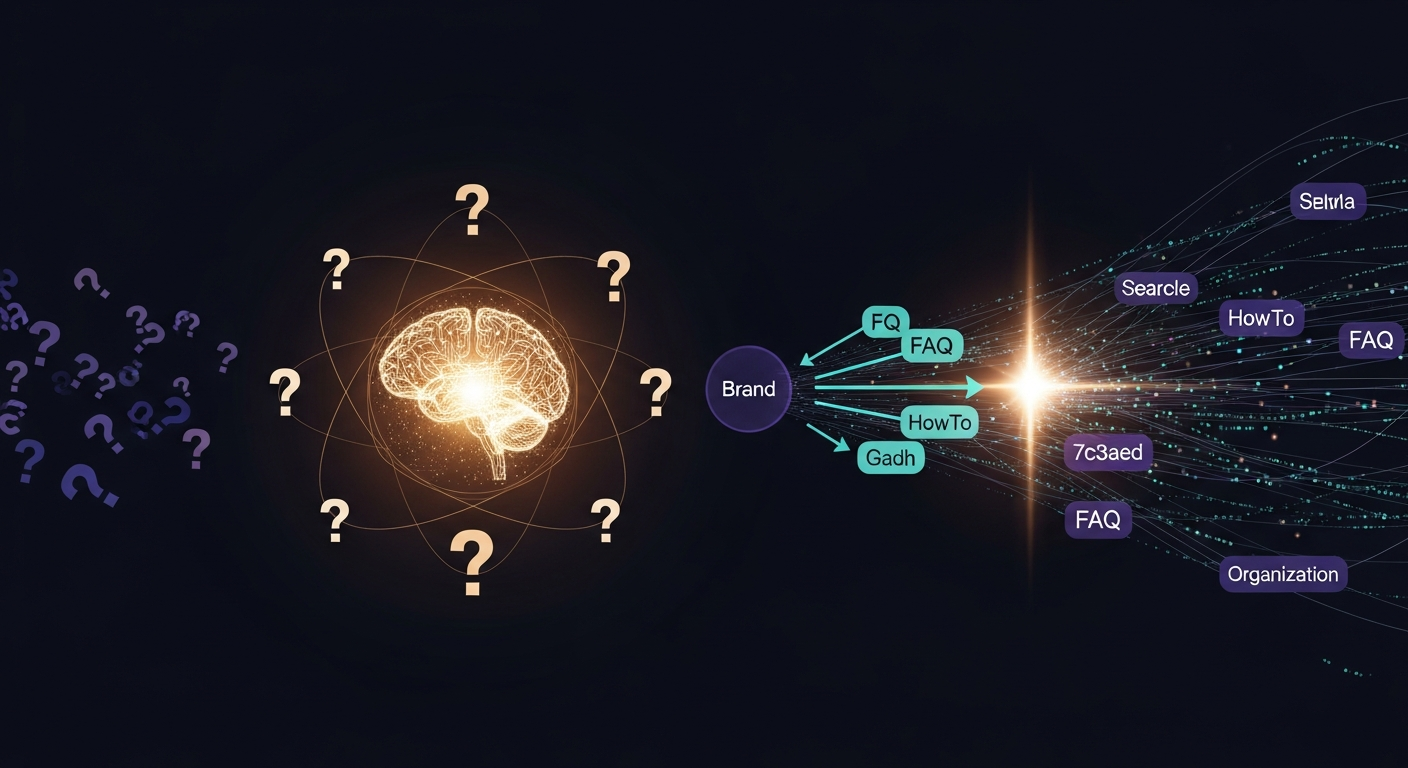
① Entity recognition -- is your brand or service consistently identified as one clear entity across the web? Organization/Person schema, a Wikipedia/Wikidata entry, and consistent naming across multiple sources all belong here. ② Structured data gap -- is the same information declared in a machine-readable form via FAQPage/HowTo/Article schema? ③ Citation context -- which brand gets cited for which type of question (definitional, comparative, procedural)? These three axes are independent of each other. Excellent content quality still loses on citation if structured data is absent; well-implemented structured data still fails to win trust as a source if entity recognition is weak.
How to Actually Find the Gap
The fastest starting point is direct observation. Fix 10-15 questions a real customer would actually ask (centered on the problem, not your brand name), run them identically against ChatGPT, Perplexity, and Gemini, and record which brand gets cited. That alone gives you a feel for which question types you are simply never mentioned in. That said, manual querying is sensitive to timing and phrasing, so it is safer to repeat the same query set periodically, or pair it with a structural scan tool, rather than concluding anything from one or two observations.
5 Mistakes Teams Make Constantly
| Mistake | Why It's a Problem |
|---|---|
| Assuming more content volume is an advantage | AI looks for the single source that precisely matches the query, not a count |
| Assuming higher brand awareness automatically means more citations | The citation criteria is entity clarity and structured data, not awareness itself |
| Judging the whole picture from one AI query | Results shift with phrasing and timing -- a small sample misleads easily |
| Diagnosing "we need more content" without separating the three axes | Resources get poured somewhere unrelated to the real cause (e.g. missing schema) |
| Improving only against your own baseline without checking the competitor gap | You miss the axis you are actually behind on, so the real citation gap never closes |
How marketing-pivot Handles the Gap
AESA Radar automatically analyzes the competitive landscape through PEST/3C/SWOT frameworks to map out market position, and C³ Cube Strategy clusters CEPs (Category Entry Points) from measured SERP data to pinpoint exactly which contexts competitors are winning in. Used together, instead of a vague "we need more content" diagnosis, you can structurally confirm which of the three axes is the real gap.
Self-Check -- Mapping the Competitive Gap
Scan your own site’s structured data and entity signals first with AEGIS Insight, then analyze the competitive landscape with AESA Radar -- together they let you confirm whether the point you are losing on is content quality, structured data, or entity recognition.
Closing Thoughts
Losing the AI citation race to a competitor is, in most cases, not a content-volume problem -- it plays out across three separate axes: entity recognition, structured data, and citation context. Writing more posts without figuring out which axis is the real cause is the most common and least efficient response.
Frequently Asked Questions
Q.Does having more content help with AI citation?
A.No. AI answer engines are not counting how many pieces of content you have -- they are looking for the single most trustworthy source that answers a specific query. You can write ten posts on the same topic, and if none of them match the question structure precisely, a competitor with one well-matched post still gets cited.
Q.Why does a competitor with lower brand awareness get cited more than we do?
A.An AI answer engine’s citation criteria is entity clarity and structured-data completeness, not brand awareness. A lesser-known competitor that clearly declares itself via Organization/Person schema and has FAQPage/HowTo matched to real question structures can win out over a bigger, less structured brand.
Q.Can I just do the gap analysis by manually asking AI myself?
A.Yes, and it is a genuinely useful starting point. But manual querying is sensitive to timing and exact phrasing, so a small sample can mislead you. It is safer to repeat the same query set periodically, or pair manual observation with an automated structural scan.
Q.What exactly does "entity recognition" mean here?
A.It is the degree to which your brand, person, or service is consistently identified as one clear entity across the web. Organization/Person schema, a Wikipedia/Wikidata entry, and consistent naming and description across multiple sources all fall under this axis -- separate from content quality itself.
Q.How do I check a competitor’s structured data?
A.You can open a competitor’s page source in browser dev tools and look directly for the application/ld+json script, or paste their URL into Google Rich Results Test to see which schema types it recognizes. A tool like AEGIS Insight, which auto-scans a URL for schema presence, makes repeated comparison across multiple competitors much faster.
Q.Once I find the gap, what should I fix first?
A.Fix whichever of the three axes has the widest gap. If content quality is already solid but structured data is nonexistent, filling schema into existing posts delivers far more return than writing new ones.
How to Apply This — Step by Step
- 1
Build a comparison query set
Define 10-15 questions a real customer would actually ask. They should center on the category or problem, not your brand name (e.g. "how do I solve this problem" rather than "what’s good about our service").
- 2
Run the same queries directly against multiple AI answer engines
Enter the same query set into ChatGPT, Perplexity, and Gemini, and record which brand gets cited and which source URLs get linked.
- 3
Check the entity-recognition gap
Compare whether Organization/Person schema exists, and whether a Wikipedia/Wikidata entry exists, for the cited competitor versus you.
- 4
Check the structured-data gap
Scan and compare FAQPage/HowTo/Article schema presence, URL by URL, between the cited competitor’s pages and yours.
- 5
Check the citation-context gap
Map out which question type (definitional, comparative, procedural) gets which brand cited. If the gap is concentrated in one question type, prioritize strengthening content structure for that type first.
More in AEO Insights