The CPC/ROAS Crisis: Why Paid Search Is Breaking and How AEO Fixes It
Rising CPCs and falling ROAS are symptoms of a structural failure in performance marketing, not execution problems. This guide explains why AI-driven zero-click behavior is the root cause and how AEO (Answer Engine Optimization) creates a durable organic acquisition channel.
Dohak Kim
Marketing Architect · Ph.D. in International Marketing (UIBE)
Published
2026-06-01
Updated 2026-06-05
Summary
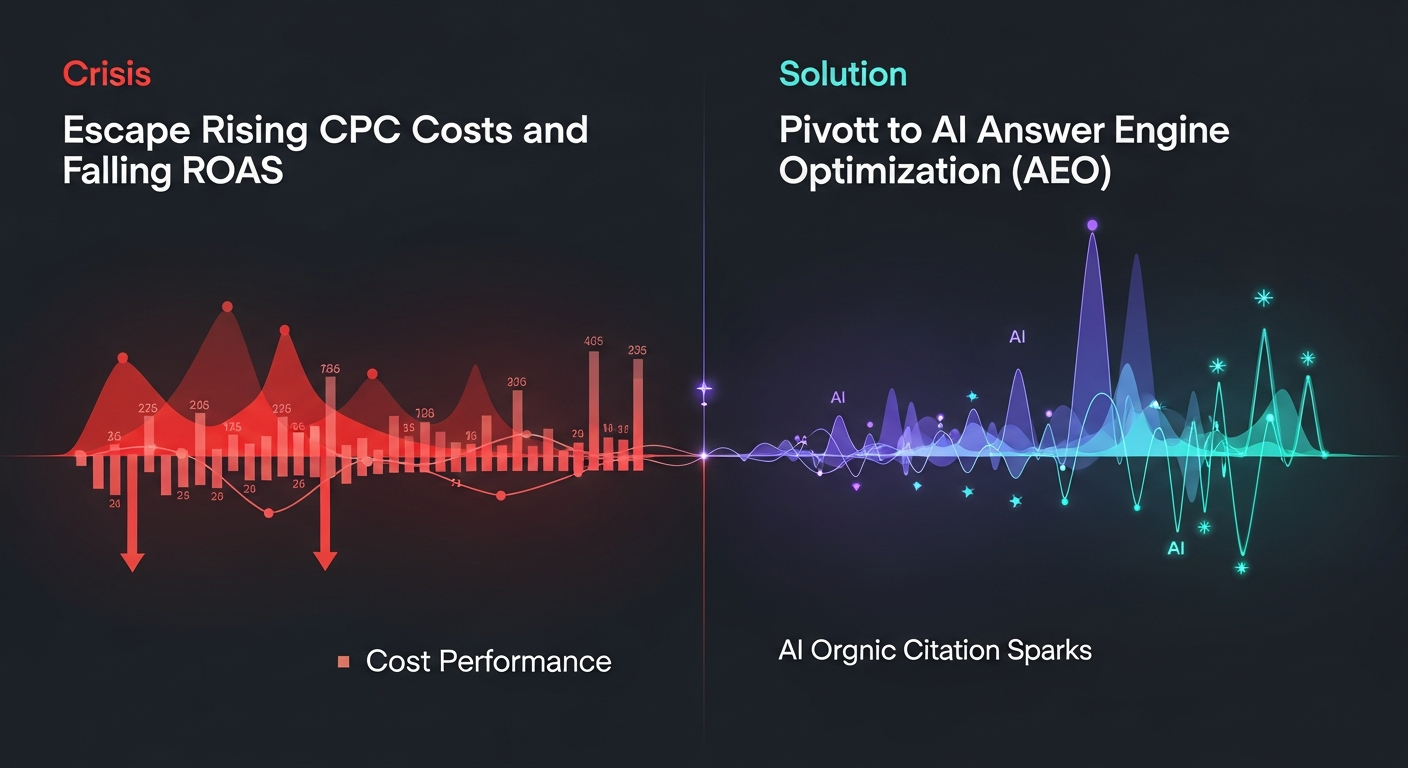
Paid search CPCs are rising while ROAS falls. This isn't a bidding problem — it's a structural one. AI answer engines are capturing buyer intent that used to generate clicks. AEO (Answer Engine Optimization) builds the brand visibility infrastructure that generates organic conversions without paying for every impression.
The Crisis Is Not What You Think
If you manage paid search budgets, you've seen the numbers deteriorate: CPCs up 30-60% year-over-year in competitive verticals, conversion rates falling despite better creative, ROAS declining even as you optimize bids obsessively.
Most teams respond with more optimization: better landing pages, tighter audience segments, higher quality scores. Some results improve marginally. The trend continues.
The problem is not execution. The model is broken.
What Actually Happened to Your Traffic
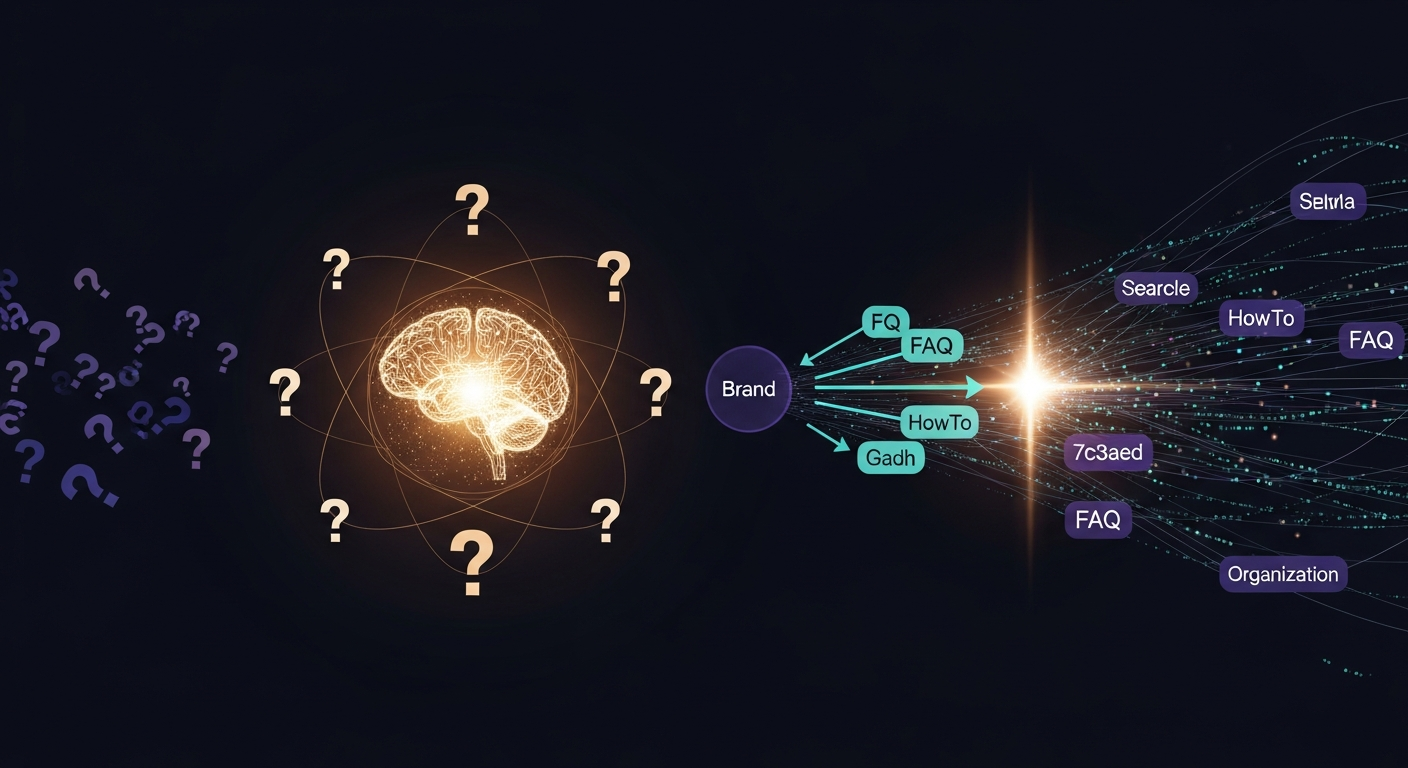
High-intent buyers — the ones who used to search "best project management software for remote teams" and click your ad — are now asking ChatGPT. They get an answer in 10 seconds without visiting a single website.
The paid search pool did not shrink equally. Low-value, early-funnel traffic stayed. High-value, decision-stage traffic migrated to AI. You're now competing harder for worse buyers at higher prices.
This is not a temporary adjustment. It is a structural redistribution of buyer intent across channels — and it will accelerate.
What AEO Does That Paid Search Cannot
Paid search rents attention. AEO builds an asset.
When AI cites your brand in a response to "best project management software for remote teams," every buyer who reads that response is pre-qualified. They didn't click a paid ad — they received an AI recommendation. The brand trust is higher, the CAC is near-zero, and the content that generated the citation keeps working indefinitely.
The compounding math is stark: a paid click costs money every time. An AEO citation costs money once (to create the content) and pays dividends forever.
The AEO Content Framework
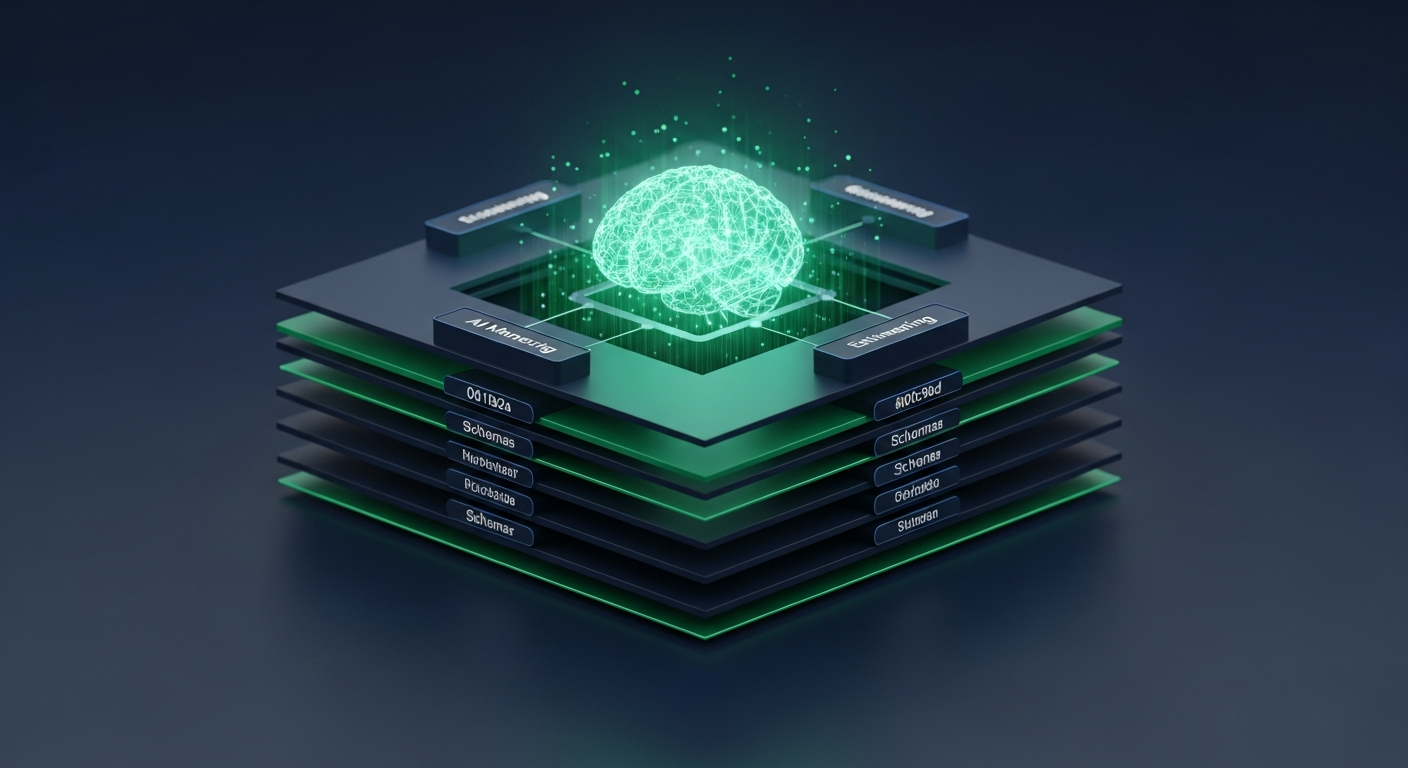
AI answer engines are pattern-matching machines. They cite content that matches the patterns they've learned to associate with authority and extractability:
Inverted Pyramid Structure
Lead with the direct answer (50-80 chars), then provide supporting context. AI systems extract the first relevant sentence that answers the query. If your first paragraph buries the answer, you lose the citation to a competitor who leads with it.
FAQPage + HowTo Schema
JSON-LD structured data signals to both Google's indexing systems and AI RAG pipelines that your content is structured for extraction. Every Hub page should include 5-10 FAQ pairs and, where applicable, a HowTo sequence. These are the formats AI systems can extract with high confidence.
Original Data and Statistics
AI systems strongly prefer citing content that contains verifiable, specific claims: percentages, time periods, named sources. "Paid CPCs increased 47% YoY in the B2B SaaS vertical" is 5× more likely to be cited than "CPCs have been rising." Build this data into your content systematically.
The Transition Playbook
You cannot pivot instantly from paid to organic. The transition takes 6-12 months. Here is the sequence:
- Month 1-2: Audit which paid keywords are migrating to AI and create AEO content for the top 20.
- Month 3-4: Measure citation lift using AEGIS Insight AEO score. Expect 15-25% improvement on targeted queries.
- Month 5-6: Begin reallocating paid budget from brand/category capture to top-of-funnel awareness where paid still works.
- Month 7+: Compound. Each cited piece builds entity authority that improves future citations. The asset grows non-linearly.
The brands that build this infrastructure now will have a 12-18 month head start on those that wait until paid channels are uneconomical.
Frequently Asked Questions
Q.Why are paid search CPCs rising while conversion rates fall?
A.AI answer engines are capturing high-intent queries that used to generate paid clicks. The buyers who would have clicked your ad now get their answer from ChatGPT or Perplexity. The remaining paid search pool is smaller and more competitive, driving up CPCs while reducing volume and quality.
Q.What is AEO and how does it reduce paid acquisition cost?
A.AEO (Answer Engine Optimization) structures content so AI answer engines cite your brand as the authoritative source. When AI cites your brand, buyers arrive already pre-sold — reducing CAC substantially. Unlike paid search, AEO builds a compounding asset: each piece of cited content generates organic authority that grows over time.
Q.What content formats does AI prefer to cite?
A.AI systems preferentially cite content with direct-answer structure (answer first, context second), FAQPage and HowTo JSON-LD schema, specific statistics and original data, definition statements ("X is Y"), and consistent E-E-A-T signals. These formats are easy to extract and carry high citation confidence.
Q.How long does it take AEO to generate measurable results?
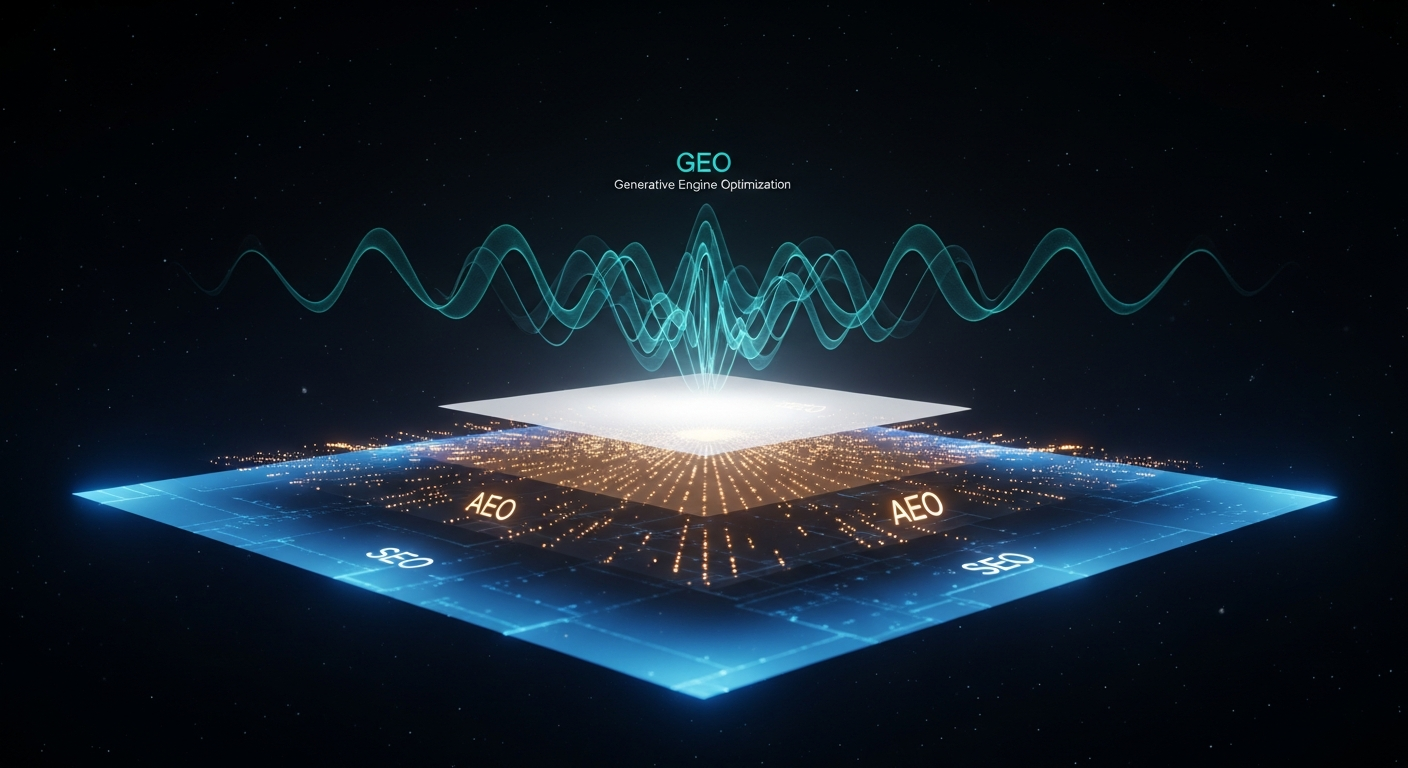
A.Initial AI citation improvements typically appear within 4-8 weeks of publishing well-structured AEO content, as AI systems with RAG (Retrieval-Augmented Generation) can index and cite fresh content quickly. GEO brand Entity accumulation — media mentions, Wikipedia, co-occurrence — takes 3-6 months to compound meaningfully.
Q.Should brands abandon paid search entirely for AEO?
A.No. The optimal mix shifts over time. In the short term, paid search funds immediate revenue while AEO builds the organic asset. As the AEO/GEO asset matures, paid budgets can be redirected from demand capture (high-intent branded/category terms) to demand creation (top-of-funnel awareness), improving overall blended ROAS.
How to Apply This — Step by Step
- 1
Audit Your Paid vs. Organic Intent Split
Identify which paid keywords represent intent that AI might now be capturing. High-cost branded terms and "best X" queries are most at risk. These are the first to migrate to AEO.
- 2
Create Direct-Answer Content
For each high-intent keyword, create a page that answers the query in the first paragraph (50-80 chars), includes FAQPage schema, and provides a HowTo sequence. This is the content AI cites.
- 3
Build the E-E-A-T Foundation
Ensure every content piece has a verified author with credentials, links to original research or data, and is cited from at least one external authoritative domain. These are the signals that determine citation priority.
- 4
Track AEGIS Index Monthly
Use AEGIS Insight to measure your AI visibility score. The AEO component (0-100) directly reflects how well your brand is structured for AI citation. Target AEO 60+ to exit the "citation dead zone".
More in AEO Insights