AI Memory Engineering: The New Marketing Operating System
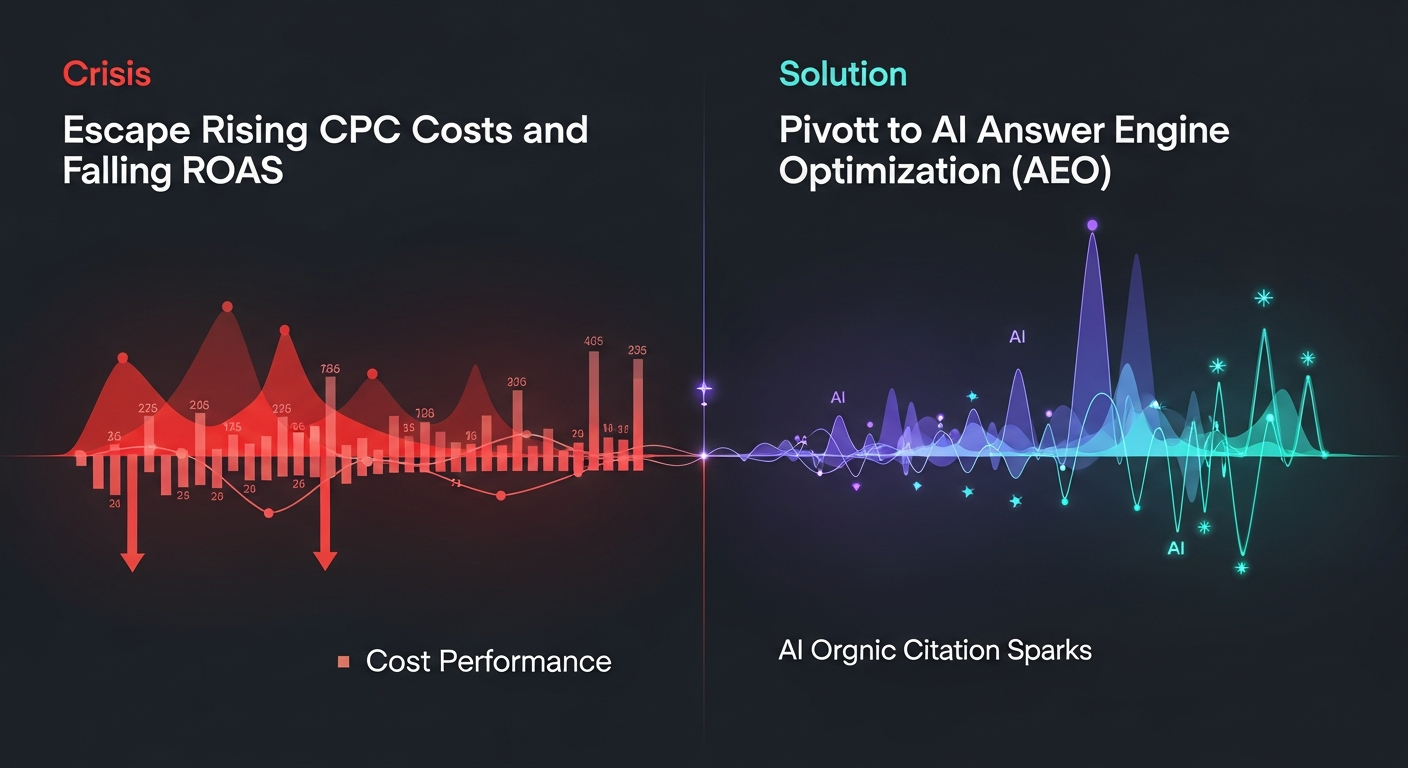
Consumers no longer click search results — they consume the AI's single answer. Brands absent from that answer are invisible. This post introduces the 4-step Memory Engineering process and the new Marketing OS that makes AI cite your brand as the authoritative source.
Dohak Kim
Marketing Architect · Ph.D. in International Marketing (UIBE)
Published
2026-06-01
Updated 2026-06-05
Summary
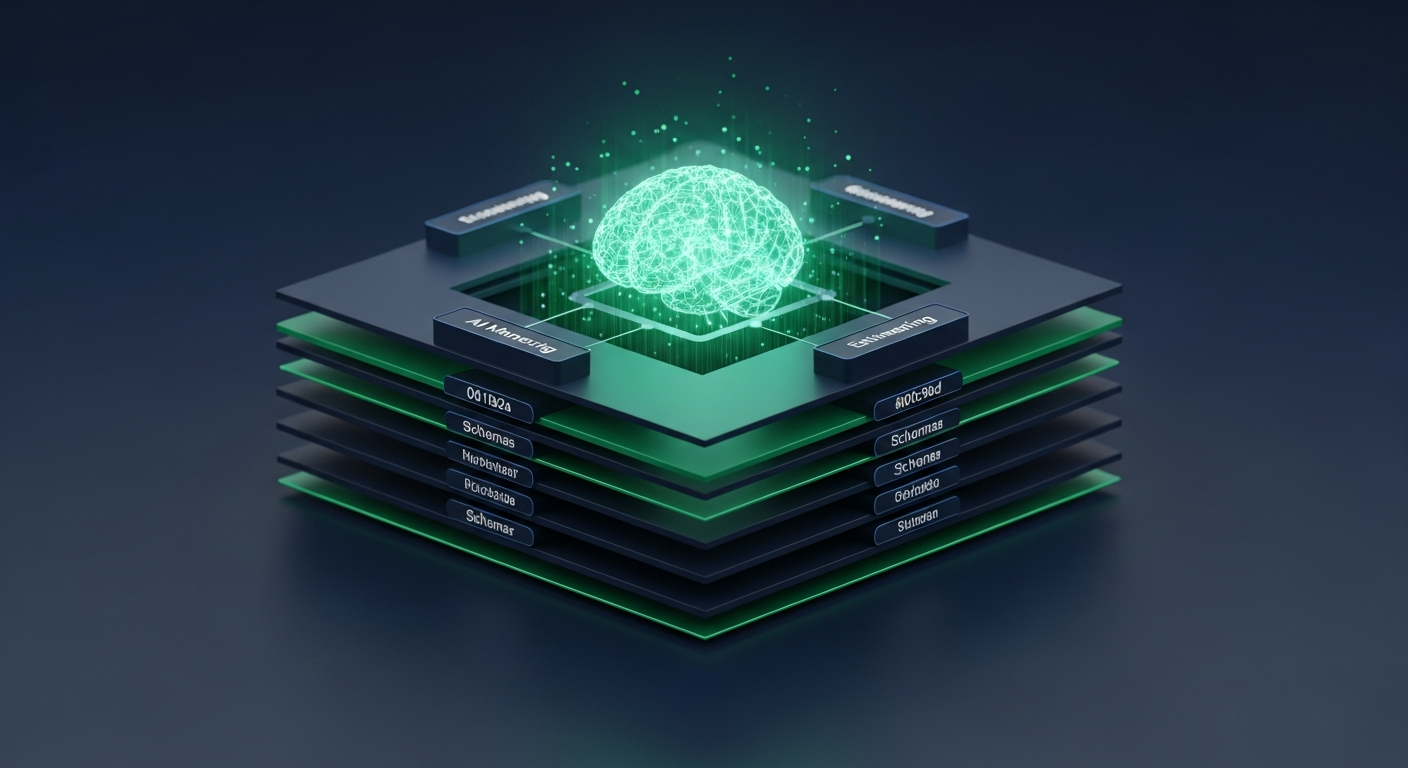
In the zero-click era, AI delivers one answer per query. If your brand isn't in it, you don't exist for that consumer at that moment. Project AEGIS's Memory Engineering framework — built on CEP, CDJ, and structured content — is how brands architect their place in AI knowledge systems.
The Zero-Click Reality
AI answer engines — ChatGPT, Perplexity, Google AI Overview — now handle queries that used to generate search clicks. When someone asks "best CRM for startups," they get a synthesized answer from AI, not ten blue links. If your brand isn't in that answer, you don't exist for that buyer at that moment.
This is the zero-click reality. And it's not coming — it's already here.
What "AI Memory" Means for Marketers
Large language models are trained on vast corpora of text. When they generate an answer, they draw on patterns learned during training — which sources were cited authoritatively, which brands appeared alongside specific category keywords, which definitions were used consistently.
AI "memory" is the aggregate of all the signals a brand has accumulated across the web that made it into training data. You cannot directly control what an LLM learned. But you can control what signals you publish now, which shapes how future models — and current RAG-augmented systems — treat your brand.
The 4-Step Memory Engineering Framework
Project AEGIS's Memory Engineering process is built around four disciplines:
1. CEP Mapping — Own the Trigger Contexts
A Category Entry Point is a specific situation or mental state that activates consumer need. "Need energy before a presentation" is a CEP for energy drinks. "Preparing a board deck with limited data team" is a CEP for BI tools. Map the CEPs your brand should own, then build content that makes your brand the AI's default answer for each one.
2. Structured Content for Citation
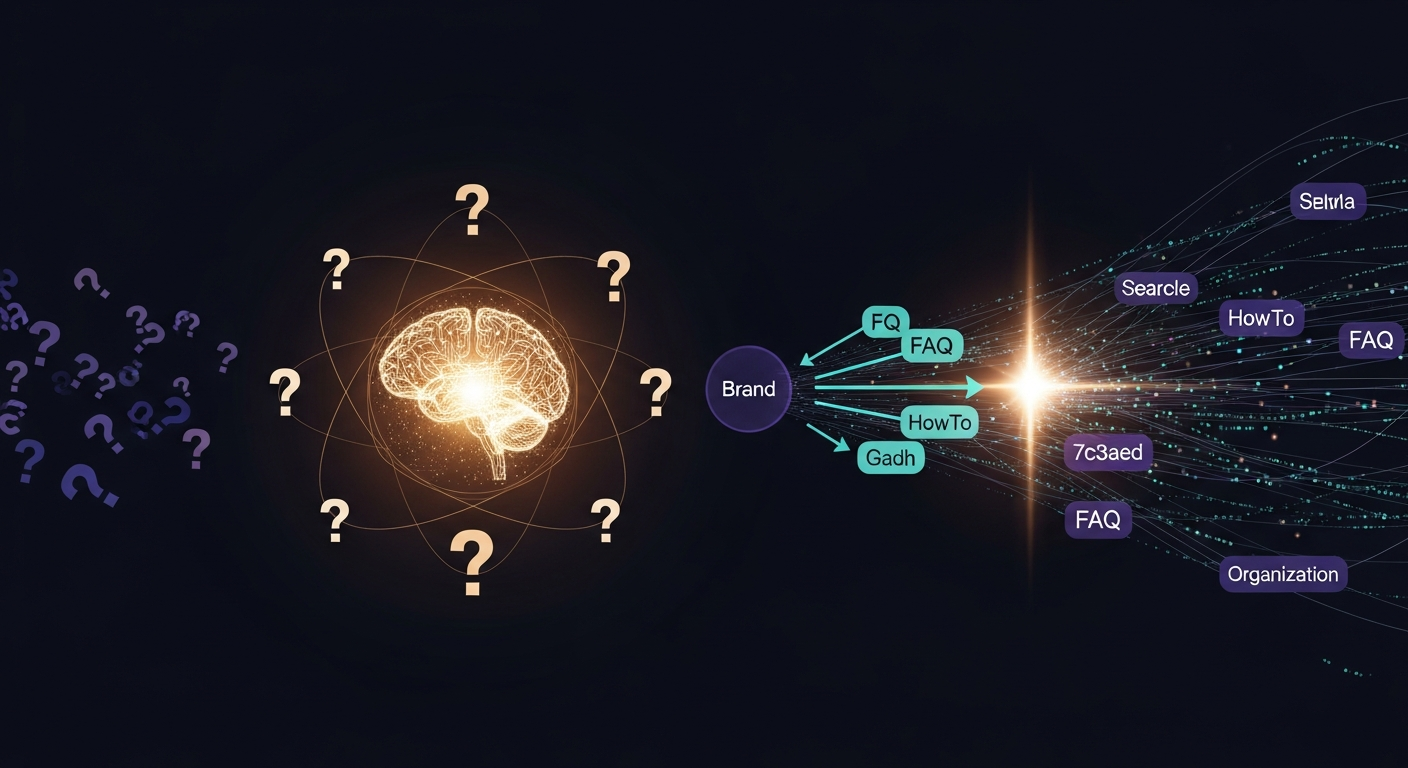
AI systems prefer content that is easy to extract: direct-answer paragraphs, definition statements ("AEO is the practice of..."), FAQ pairs, and HowTo step sequences. FAQPage and HowTo JSON-LD schema signal extractability to both Google and AI augmentation systems. Every Hub page should contain these structures.
3. Brand Entity Construction
E-E-A-T (Experience, Expertise, Authoritativeness, Trustworthiness) is not just a Google concept — it's the proxy AI systems use to evaluate citation reliability. Signals include: original proprietary research, media mentions from authoritative sources, consistent author credentials, and co-occurrence with category authority keywords.
4. Continuous AEGIS Index Tracking
The AEGIS Index (SEO×0.25 + AEO×0.25 + GEO×0.50) measures AI search visibility across 38 metrics. GEO carries 2× weight because generative AI is the primary future traffic driver. Track your scenario each month and execute the scenario-specific prescription until you reach S8 AEGIS.
The Marketing OS in Practice
A Marketing OS connects diagnosis, strategy, and execution in a single pipeline:
- Diagnose with AEGIS Insight — identify which of the 38 metrics are failing
- Strategize with C³ Cube — cluster your CEPs, build Hub & Spoke architecture
- Execute with FORGE — generate AEO-optimized content with schema pre-built
- Measure — re-run Insight monthly to track scenario progression
The brands building this OS now will own the AI-answer layer that brands building it in two years will be paying to access.
Frequently Asked Questions
Q.What is AI Memory Engineering in marketing?
A.Memory Engineering is the practice of structuring brand content, data, and authority signals so that AI language models consistently "remember" your brand when generating answers to relevant queries. It involves CEP mapping, E-E-A-T accumulation, structured schema markup, and brand Entity construction.
Q.What is a Marketing OS (Operating System)?
A.A Marketing OS is a unified system that connects brand diagnosis (AEGIS Insight), market intelligence (AESA Radar), strategic positioning (C³ Cube), and content execution (FORGE) into a single pipeline. It replaces disconnected tactics with an integrated architecture designed for AI-first brand visibility.
Q.What is a Category Entry Point (CEP) in the context of AI search?
A.A CEP is a specific mental trigger or context that activates consumer need for a product category — e.g., "need a quick energy boost" activates energy drinks. In AI search, CEPs represent the queries and contexts where your brand should appear in AI-generated answers. Owning CEPs means your brand is the AI's default citation for those trigger contexts.
Q.How does the zero-click era affect brand building?
A.In the zero-click era, consumers get answers without visiting websites. This means traditional metrics (click-through rate, page views) miss the actual influence surface. Brand visibility must be measured at the AI answer layer — whether your brand is cited, how it is described, and how many CEP contexts it owns. AEGIS Index measures exactly this.
How to Apply This — Step by Step
- 1
Map Your CEPs
Use Signal (CEP analysis tool) to identify the specific contexts and triggers where consumers would look for your brand category. Each CEP is a "memory slot" you need to occupy in AI knowledge systems.
- 2
Build Structured Authority Content
Create Hub content with direct-answer paragraphs, FAQPage schema, and "X is Y" definition statements. These are the formats AI systems can extract and cite reliably.
- 3
Accumulate Brand Entity Signals
Build E-E-A-T: publish original research with statistics, earn media mentions, create consistent NAP data, and ensure your brand appears alongside category keywords across authoritative sources.
- 4
Measure and Iterate with AEGIS Index
Run AEGIS Insight monthly to track your score across 38 metrics. Target scenario progression: S1 PHANTOM → S6 STEALTH → S8 AEGIS. Each scenario has a specific prescription for the next step.
More in AEO Insights