Measuring Performance When Clicks Disappear — How to Design AEO KPIs
In an era where AI summarizes the answer for you and clicks themselves decline, the old SEO click-and-ranking KPI framework cannot measure AEO performance. This post accepts the reality that no perfect automated metric exists yet, and covers how to approximate measurement in practice.
Dohak Kim
Marketing Architect · Ph.D. in International Marketing (UIBE)
Published
2026-09-07

Summary
"We did AEO -- so how do we report on it?" The click-era KPI framework does not have an answer. Start by accepting that no tool perfectly automates citation-rate measurement yet, then look at what you can track instead.
Why Clicks and Rankings Can't Measure AEO Performance
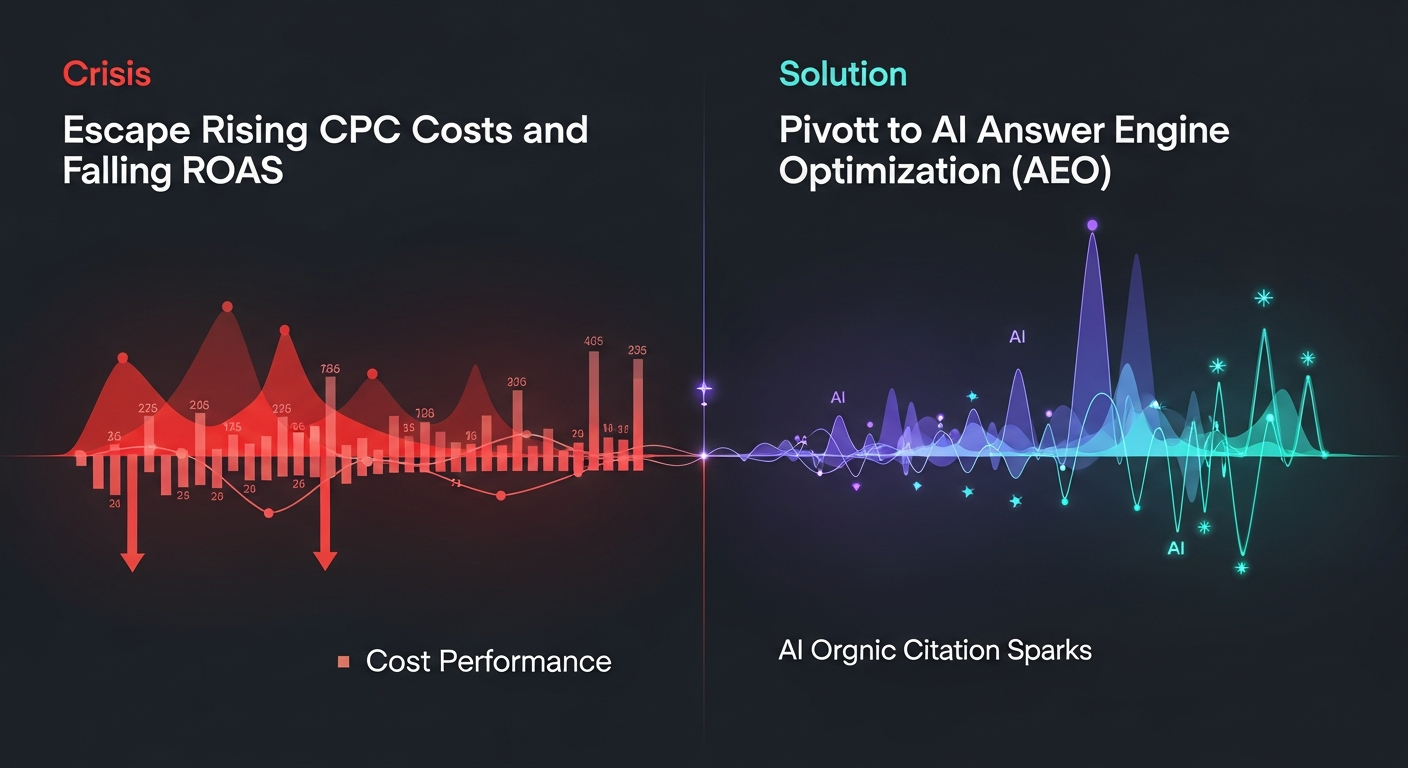
SEO performance measurement has long been straightforward -- rankings go up, clicks go up, clicks go up, traffic and conversion go up. AI answer engines break that chain in the middle. When a user asks a question, AI summarizes an answer and shows it directly, so even when our content was the source cited for that answer, no click ever happens in a large share of cases. Reading "zero clicks" as "zero influence" is a mistake -- the influence is there, the old measurement method just cannot see it.
The Reality: No Perfect Automated Tool Exists Yet
Here is the honest part that needs saying plainly. There is no industry-standard tool yet that automatically tallies citation rate with full accuracy. That is because there is no public API that lets you fully query, from outside, which sources AI answer engines cited how often for which queries. The term "Share of Model" has started circulating among practitioners, but there is no recognized standardized calculation or benchmark number behind it. Reporting an "exact citation rate %" without acknowledging this reality is not meaningfully different from making up a number with no basis.
What You Can Track Instead
The absence of a perfect metric does not mean you have nothing. There are directional proxy metrics. Direct observation -- fix 10-20 core queries and periodically run them against the major AI answer engines, logging whether you were cited. It is not precise, but repeated on a fixed standard, a trend emerges. Branded and direct search shifts -- if users who encountered your brand inside an AI answer subsequently search your brand name directly or visit your site directly more often, that is indirect evidence of AI exposure that never registers as a click. Referral-source mix shifts -- track the share of referral traffic coming from AI answer engines over time.
5 Mistakes Teams Make Constantly
| Mistake | Why It's a Problem |
|---|---|
| Hunting for a tool that automatically outputs an "exact citation rate %" | No such standardized public API exists industry-wide |
| Concluding AEO isn't working because clicks dropped | Queries where AI just summarizes the answer never generated clicks to begin with |
| Abandoning the old SEO click/ranking dashboard entirely | The SEO channel itself remains valid -- AEO doesn't replace it, it covers a separate zone |
| Changing query phrasing between observations | Breaks the fixed baseline, making time-series comparison meaningless |
| Mistaking a structural diagnostic score (leading indicator) for actual citation results | A score like the AEGIS Index measures "citation-readiness," not "whether it happened" |
How marketing-pivot Handles This
The AEGIS Index inside AEGIS Insight is a leading indicator -- it does not tally actual citation events in real time, it scores 38 structural and content factors that influence citation likelihood. What we actually do in practice is put that next to a lagging indicator -- periodic direct observation of a fixed query sample -- and cross-check whether observed citation frequency actually rose when the score rose. Looking at only one of the two produces confusion like "the score went up, so why doesn't it feel like anything changed" or "citations went up in observation, so why hasn't the score moved."
Self-Check -- Where to Start Right Now
Check your structural leading indicator (the AEGIS Index) first with AEGIS Insight, then fix a core query set and run direct observation in parallel, following the steps in this post -- that gets you a directional, if imperfect, AEO performance measurement system running today.
Closing Thoughts
The most honest starting point for measuring AEO performance is accepting that no perfect automated metric exists yet. Building on top of that -- stacking a structural leading indicator like a diagnostic score together with a lagging indicator like direct sample-query observation -- is the most honest and practical method available in the field right now.
Frequently Asked Questions
Q.Is there a tool that automatically measures citation rate with 100% accuracy?
A.No standardized automated tool exists industry-wide yet. There is no public API that lets you fully tally, from the outside, which brand got cited how often for which query across AI answer engines. What is actually usable in practice right now is approximate measurement through repeated sample queries, paired with correlated proxy metrics like branded search volume and referral-mix shifts.
Q.I have heard the term "Share of Model" -- is that an official metric?
A.It is not yet a formally standardized industry metric -- it is closer to a term practitioners have started using to refer to a brand’s share of AI answer-engine citations. The concept is useful, but you should be clear-eyed that there is no standardized calculation method or recognized benchmark number behind it yet.
Q.Does a rise in branded search volume mean AEO is working?
A.It is not direct proof, but it can be a meaningful corroborating signal. If more users who encountered your brand inside an AI answer subsequently search your brand name directly or visit your site directly, that is an indirect signal that AI exposure is happening even though it never shows up as a click.
Q.Should I stop looking at the old SEO dashboard (clicks, rankings)?
A.No. SEO metrics still show real performance for a channel that remains valid. The mistake is assuming those metrics also represent AEO performance. AEO covers influence in the zone where no click occurs at all (queries where AI just summarizes the answer and stops), so it needs its own separate observation method.
Q.Can a small team track citation status at all?
A.Yes. Even without a fully automated enterprise-grade tool, fixing 10-20 core queries and manually asking the major AI answer engines once or twice a month, logging the results, gives you directional tracking. What matters is consistency and a fixed standard, not sophistication.
Q.How does the AEGIS Index handle citation rate?
A.The AEGIS Index does not tally actual citation events in real time -- it scores 38 structural and content factors that influence citation likelihood (structured data, E-E-A-T signals, entity signals, and so on). It functions as a leading indicator of "how citation-ready you are," not a lagging indicator of "whether you actually got cited."
How to Apply This — Step by Step
- 1
Fix a core query set
Define 10-20 questions that matter to your business and keep the exact phrasing identical every time. Changing the wording breaks any time-series comparison.
- 2
Observe and log manually, on a regular cadence
Run the same queries against ChatGPT, Perplexity, and Gemini once or twice a month and log whether you were cited and which source was cited, in a spreadsheet.
- 3
Track proxy metrics in parallel
Watch branded search volume trends, the share of referral traffic coming from AI answer engines, and direct traffic shifts. These indirectly cover the influence that click-based metrics miss.
- 4
Look at leading and lagging indicators side by side
Put a structural diagnostic score like the AEGIS Index (leading indicator) next to observed citation frequency (lagging indicator), and check whether actual citations rose when the score rose.
- 5
State the uncertainty explicitly when reporting
Note in the report that this is a sample-based approximation, not a perfect automated measurement. Not overstating precision is what protects credibility over the long run.
More in AEO Insights