GEO vs SEO vs AEO — How the Three Strategies Differ in the AI Search Era
A complete breakdown of SEO, AEO, and GEO: definitions, differences, prioritization, and how all three combine into a unified AI search visibility system. Includes AEGIS Index weighting and a phased execution framework.
Dohak Kim
Marketing Architect · Ph.D. in International Marketing (UIBE)
Published
2026-06-04

Summary
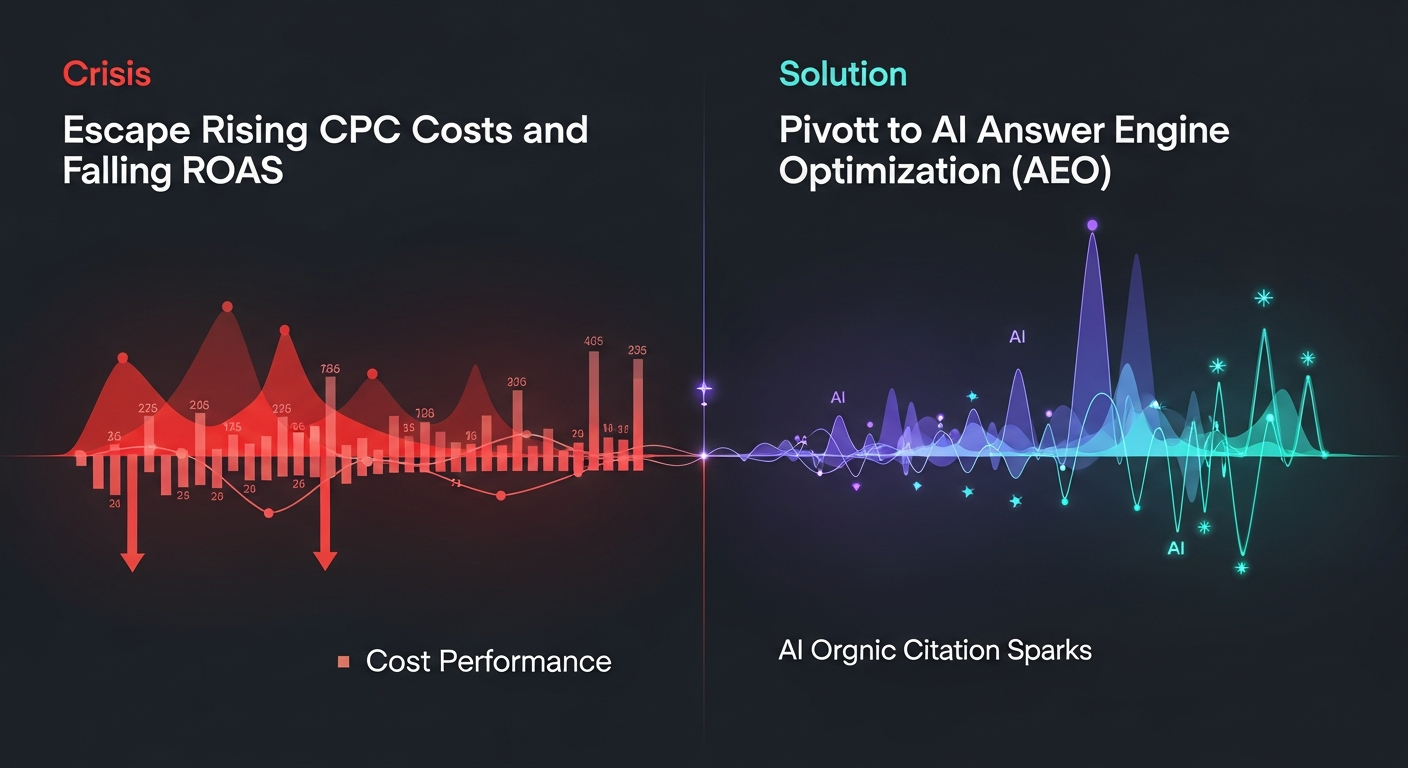
SEO targets search result rankings. AEO targets AI answer engine citations. GEO targets brand Entity construction inside generative AI knowledge systems. The three strategies are not competing — they are the three interdependent layers of complete brand visibility in the AI search era.
The Three Strategies — 30-Second Definitions
Complete brand visibility in the AI search era requires three distinct, interdependent strategies:
- SEO (Search Engine Optimization): Rank higher on Google and Naver. Technical structure, content quality, and backlinks are the core levers.
- AEO (Answer Engine Optimization): Be selected as the cited source when AI generates a single "definitive answer." Structured data, E-E-A-T signals, and direct-answer content format are core.
- GEO (Generative Engine Optimization): Build brand authority so that generative AI cites your brand organically — through media mentions, brand Entity, and original research. GEO has no relation to "geographic" — it is a distinct AI marketing concept.
Why All Three Are Required
Many marketers ask: "If AI is the future, can't we just focus on GEO?" The answer is no.
The AEGIS Index proves this: AEGIS Index = SEO×0.25 + AEO×0.25 + GEO×0.50. An SEO score below 30 gates the entire index to zero — regardless of AEO and GEO performance. SEO is still the foundation in the AI search era.
Conversely, strong SEO alone does not earn AI answer citations. Without structured data and question-format content, AI cannot identify your brand as a reliable answer source for specific query types.
SEO: Foundation and Gatekeeper
SEO is the oldest digital marketing discipline — and it remains the first gate in the AI search era.
What SEO covers:
- Technical SEO: Crawling, indexation, HTTPS, canonical tags, Core Web Vitals, mobile optimization
- Content SEO: Keyword research, meta tags, heading structure (H1–H3), internal linking
- Off-page SEO: External backlinks, brand search signals, domain authority
SEO's role has evolved in the AI era: it was once "earn clicks" and is now "ensure AI crawlers correctly understand your site architecture and content intent."
AEO: Becoming the AI Answer Source
AEO emerged as a distinct discipline around 2023, though its foundations — structured data and E-E-A-T — have been Google priorities for years.
What AEO covers:
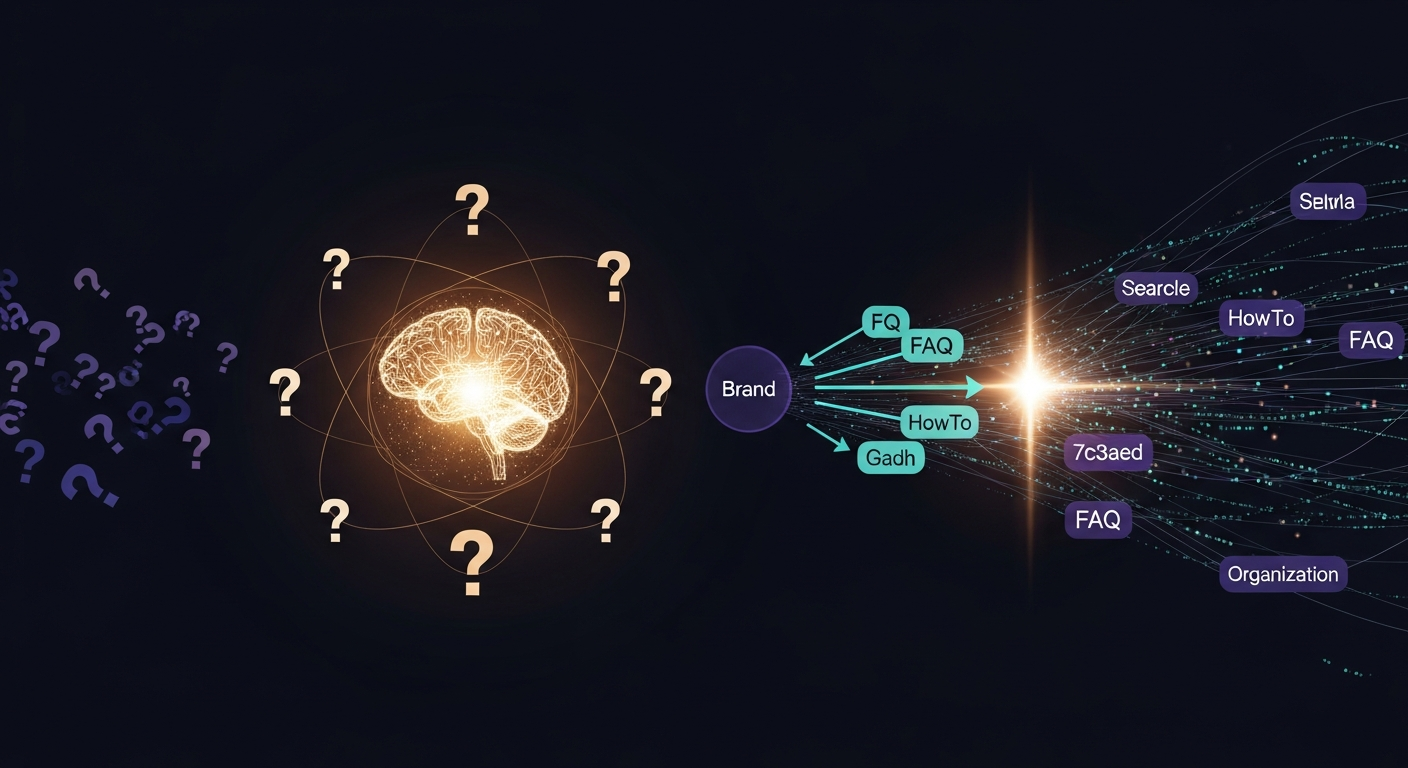
- Structured data: FAQPage, HowTo, Organization, Article JSON-LD (weight ×1.5–2.0)
- E-E-A-T: Experience, Expertise, Authoritativeness, Trustworthiness signals
- Intent matching: Inverted-pyramid content structure, direct answers, definitional sentences
- Featured Snippet optimization: Formatting content to be selected as the single definitive answer
The core AEO skill is reverse-engineering "what question will AI be asked, and what does the ideal answer look like" — then becoming that source.
GEO: Building Your Brand's Place in AI Knowledge
GEO is the newest and most long-term of the three strategies. Its goal is to build brand Entity inside the external knowledge ecosystem that AI models reference when generating responses.
What GEO covers:
- Brand Entity: Google Knowledge Panel, Wikipedia/encyclopedia inclusion, external definition documents (weight ×2.0)
- External media mentions: Press coverage, trade publication contributions, industry report citations
- Original research: Brand-owned proprietary data publications (primary sources AI trusts most)
- AI crawler allowlisting: Allowing GPTBot, ClaudeBot, PerplexityBot in robots.txt (weight ×2.0)
- Multimedia presence: YouTube channel, podcast, audio/video assets
The key GEO principle is accumulating "information AI finds worth citing" in external authoritative locations. External platform mentions contribute more to GEO scores than content on your own site.
Three-Strategy Comparison at a Glance
- Optimization target: SEO = search engine algorithm / AEO = AI answer engine / GEO = generative AI knowledge model
- Primary metric: SEO = clicks and rankings / AEO = AI answer citations / GEO = organic AI mentions
- Core techniques: SEO = technical SEO, backlinks / AEO = structured data, E-E-A-T / GEO = external media, Entity
- Time to impact: SEO = weeks to months / AEO = immediate to weeks / GEO = months to years
- AEGIS weight: SEO = ×0.25 / AEO = ×0.25 / GEO = ×0.50
Phased Execution: The Right Sequence
Phase 1: SEO + AEO Technical Foundations Simultaneously (Weeks 0–4)
Fix technical SEO (robots.txt, sitemap, HTTPS, canonicals) while simultaneously embedding Organization, FAQPage, and HowTo JSON-LD statically in index.html. Both can be executed at the code level in the same sprint. T1 (structure) scores rise immediately.
Phase 2: AEO Content Production (Months 1–3)
Continuously publish definitional, procedural, and comparative blog content. Apply FAQPage schema to every post. Strengthen E-E-A-T through author attribution and external citations. This phase produces the fastest AEO score gains.
Phase 3: GEO External Signal Construction (Month 3+)
Begin publishing original research reports, contributing to industry media, registering in authoritative directories, and creating regular brand content on LinkedIn and YouTube. Wikipedia contribution is a long-term initiative requiring consistent groundwork.
The Integrated AEGIS Framework
Project AEGIS diagnoses SEO, AEO, and GEO across 38 metrics and classifies current brand position into 8 scenarios (S1 PHANTOM → S8 AEGIS):
- S1 PHANTOM: All three below 60 — start with technical foundations
- S2 FOSSIL: SEO above 60 only — invisible to AI search, prioritize AEO
- S8 AEGIS: All three above 60 — full optimization achieved
AEGIS Insight provides current scenario classification and the shortest path to the next scenario. The goal is not to optimize each strategy independently but to raise the AEGIS Index as an integrated system.
Frequently Asked Questions
Q.What is the biggest difference between SEO, AEO, and GEO?
A.SEO optimizes for rank positions on Google and Naver. AEO optimizes to be the cited source inside AI-generated answers (ChatGPT, Perplexity, Google AI Overview). GEO builds brand Entity inside generative AI knowledge systems so that models cite the brand organically. Each strategy targets a different layer of the information ecosystem.
Q.What is GEO (Generative Engine Optimization)?
A.GEO is the strategy of building brand authority so that generative AI models — ChatGPT, Gemini, Claude, Perplexity — select your brand as an external citation source when generating responses. It involves accumulating media mentions, brand Entity signals, original research, and Wikipedia presence. GEO has no relation to "geographic" optimization — it is a distinct AI marketing term.
Q.Is SEO still important in the AI search era?
A.Yes. SEO carries a ×0.25 weight in the AEGIS Index, and an SEO score below 30 gates the entire AEGIS Index to 0 — regardless of AEO or GEO performance. SEO remains the foundation of brand visibility even as AI search grows. The role has evolved from "earn clicks" to "ensure AI crawlers understand your site correctly."
Q.Which strategy should I prioritize first?
A.The recommended sequence is SEO → AEO → GEO. Without strong SEO, AI crawlers cannot reliably parse your site. Without AEO structured data, GEO external signals lack an authoritative destination to point to. That said, SEO and AEO technical foundations can be built simultaneously.
Q.Does GEO require Wikipedia inclusion?
A.Wikipedia and similar encyclopedic citations carry a ×2.0 GEO weight and are among the strongest signals — but they are not required. Media coverage, original research publication, AI crawler allowlisting in robots.txt, and brand Entity construction all contribute meaningfully to GEO scores.
Q.How does the AEGIS Index combine all three strategies?
A.AEGIS Index = SEO×0.25 + AEO×0.25 + GEO×0.50. GEO carries double weight because generative AI search is the primary future traffic channel. All three scores above 60 achieves the top tier: S8 AEGIS.
How to Apply This — Step by Step
- 1
Build SEO Technical Foundation
Fix crawling and indexation issues, enforce HTTPS, set canonical tags, submit sitemap.xml, configure robots.txt correctly, and install baseline structured data. SEO below 30 zeros out the AEGIS Index — this is the unconditional first step.
- 2
Install AEO Structured Data
Statically embed FAQPage, HowTo, and Organization JSON-LD in index.html. In SPA environments, static schema is crawled before JavaScript executes — this step is non-negotiable for AEO impact.
- 3
Produce AEO Content
Publish definitional, procedural, and comparative content in inverted-pyramid structure. Lead every piece with a direct answer under 50 words, then support with evidence and detail.
- 4
Build GEO External Signals
Contribute to industry media, register in authoritative directories, publish original research data, and allow AI crawlers (GPTBot, ClaudeBot, PerplexityBot) in robots.txt. Wikipedia contribution is a long-term goal.
- 5
Diagnose with AEGIS Insight
Run AEGIS Insight to get current SEO/AEO/GEO scores and scenario classification. Use the 90-day roadmap to execute Quick Wins first, then structural improvements, then scenario advancement.
More in AEO Insights